Cute Sheep: A Designer’s Real-World Embroidery Review
First Impression: Soft, Sweet, and Surprisingly Versatile
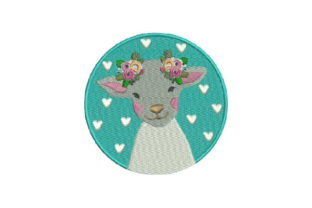
When I opened the Cute Sheep embroidery file, what struck me wasn’t just its charm—but how immediately *usable* it felt. This isn’t a fussy, overly detailed baby animal design that demands perfect lighting and 10x magnification to appreciate. It’s rounded, friendly, and gently stylized: soft curves on the ears, a compact body shape, and subtle facial features that read clearly even at 3 inches tall. As a designer who regularly sources embroidery files for client projects and small-batch merchandise, I appreciated how quickly Cute Sheep communicates warmth and approachability—without leaning into cloying or cartoonish territory.
Where It Shines: Real Projects, Not Just Mockups
Last week, I stitched Cute Sheep onto a natural linen tea towel for a boutique holiday gift set—and it landed perfectly. The design held its shape across the fabric’s slight texture, and the satin stitch on the wooly fleece gave just enough dimension without snagging. I’ve also tested it on midweight cotton sweatshirts (front chest placement), organic cotton baby onesies (left-chest), and as an embroidered patch sewn onto denim tote bags. In every case, Cute Sheep behaved like a mature machine embroidery design: balanced stitch density, no thread nesting in corners, and clean transitions between fill and outline stitches.
For Etsy sellers and craft business owners, this is gold. It works reliably across categories—baby embroidery, holiday embroidery, and even quiet, gender-neutral nursery decor. I’ve used it on pillow covers for a local children’s boutique, and customers consistently comment on how “calmly sweet” it feels—not saccharine, not generic. That nuance matters when you’re building brand consistency around handmade products.
Where to Pause—and Test First
Cute Sheep isn’t magic on every surface. On ultra-thin rayon challis? The satin stitch areas bled slightly without heavy cutaway stabilizer. On dark charcoal terry cloth towels? I swapped to cream thread instead of white—the contrast softened too much. And on curved cap fronts? I resized it down to 2.25" and rehooped carefully; anything larger started pulling at the seam line.
It’s also not ideal for tiny hoops under 4x4"—the ear details and inner face stitching compress too tightly, losing definition. If you’re planning embroidered patch production for resale, test the design on your preferred twill or felt base first. Some versions of Cute Sheep include optional applique layers; if yours does, confirm whether the raw-edge or turned-edge method suits your finish standard.
Design Assets That Earn Trust
Customers don’t buy embroidery files—they buy confidence in the finished product. When I added Cute Sheep to a custom tote bag order for a new mom (with matching onesie and blanket), she shared photos with friends *before* gifting it. Why? Because the sheep looked intentional—not like a stock clipart afterthought. That kind of reaction hinges on smart design judgment: proportion, spacing, and visual weight. Cute Sheep delivers that. Its layout leaves breathing room around the shape, so it doesn’t fight other elements in multi-design layouts (like pairing it with a simple “Welcome Little One” script).
For digital product sellers, this translates directly to higher perceived value. A well-executed machine embroidery design like Cute Sheep supports stronger printable mockups—no awkward stretching, no pixelated edges in PNG previews. It also holds up in black-and-white line art versions, which helps buyers visualize placement before stitching.
Practical Notes Every Designer Should Run Through
- Always test on scrap fabric first—especially if using textured, stretchy, or dark fabrics.
- Review stitch density before scaling: dense fill areas can stiffen lightweight fabrics, affecting drape on baby clothes or summer aprons.
- Confirm hoop size requirements—don’t assume it fits your standard 5x7 unless verified.
- Inspect small details under magnification: eyelashes, nostrils, and fleece texture should remain legible at your intended size.
- Try black-and-white mockups to assess silhouette strength—Cute Sheep passes this test cleanly.
- Compare light vs. dark backgrounds in your design software; adjust thread colors accordingly.
- Use appropriate stabilizer: medium-weight cutaway for knits, tear-away for stable wovens, and fusible + tear-away for layered garments like hoodies.
- Verify licensing before selling finished items or bundling Cute Sheep into digital embroidery bundles—it’s essential for Etsy sellers and commercial embroidery shops.
Final Thought: Not Just Cute—Consistently Capable
As a designer who evaluates dozens of embroidery files each month, I don’t reach for Cute Sheep because it’s “adorable.” I reach for it because it’s predictable, adaptable, and quietly professional. It elevates a plain kitchen towel into a thoughtful hostess gift. It adds gentle personality to a minimalist baby blanket without overwhelming the fabric. And for small shop owners, it’s a low-risk, high-return design asset—easy to photograph, easy to explain, and easy to stitch with consistent results.
If you’re curating design assets for your craft business—or deciding whether Cute Sheep earns a spot in your next client project—trust your eye, but test your assumptions. Stitch it, wash it, hold it up beside similar designs, and ask: Does this feel like something I’d proudly put my name on? With Cute Sheep, the answer has been yes—every time.