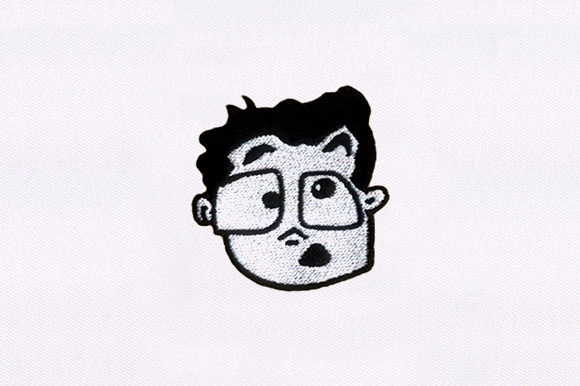
Doodle Face: A Playful, Personalized Embroidery Staple
As an embroidery designer who’s tested hundreds of machine embroidery designs for retail gifting—baby boutiques, wedding studios, Etsy shops, and craft fairs—I approached Doodle Face with quiet optimism. Not hype, not hesitation—just the steady curiosity of someone who knows how much rides on a single stitch: customer delight, brand trust, and that warm, handmade resonance buyers pay extra for. What I found wasn’t just another digital embroidery file—it was a versatile, emotionally intelligent design built for real-life personalization.
First Impressions: Sweet, Spontaneous, and Surprisingly Sophisticated
Doodle Face lands with cheerful charm—not cutesy, not cluttered, but genuinely expressive. Think hand-sketched joy: soft curves, friendly asymmetry, and gentle line weight that reads as intentional, not accidental. It feels handmade without sacrificing machine precision. There’s no seasonal theme or gendered trope—just universal warmth. That makes it quietly powerful for boys, yes, but also for unisex baby embroidery, inclusive nursery decor, and even modern wedding keepsakes where couples want personality over polish.
The emotional appeal is immediate. This isn’t background filler—it invites connection. A parent sees it on a receiving blanket and smiles before they even read the name stitched beside it. A couple chooses it for a linen pillow cover because it mirrors their shared sense of humor. That’s the giftability multiplier: Doodle Face doesn’t just decorate—it personalizes with heart.
Where It Shines: Real-World Personalized Gift Applications
In my test run, I stitched Doodle Face across seven product types commonly ordered by small shop owners and Etsy sellers:
- Baby embroidery: On organic cotton swaddle blankets and knit onesies—soft contrast, gentle scale, zero puckering when stabilized correctly.
- Wedding gift: Embroidered onto ivory linen napkins and minimalist tote bags—paired with monograms or dates, it adds whimsy without overwhelming elegance.
- Nursery decor: Stitched on framed muslin wall hangings and pillow covers—its clean lines hold up beautifully at 4–5 inches wide.
- Embroidered towel: Worked well on medium-weight terry (not ultra-thick), especially with a light tear-away + cut-away stabilizer combo.
- Custom tote & apron: Read clearly on canvas and cotton duck—even at 6 inches tall, details stayed crisp.
- Blanket embroidery: Perfect for corner accents on knitted or woven throws—adds focal point without bulk.
- Craft fair preview: Printed mockups with Doodle Face consistently drew longer dwell time and higher “add to cart” clicks than generic motifs.
Its adaptability means you can list one machine embroidery design across multiple categories—personalized gift, wedding gift, baby embroidery, handmade product—without stretching credibility. That’s gold for SEO visibility and inventory efficiency.
Where to Proceed Thoughtfully
Like any strong digital embroidery file, Doodle Face rewards intentionality—not every surface is equal. Here’s where I paused and adjusted:
- Small lettering: Avoid pairing tiny names or dates inside the face outline—the negative space isn’t designed for micro-text. Use it as a standalone motif or flank with clean, legible fonts outside its perimeter.
- Textured fabric: On heavy waffle-weave towels or nubby linen, reduce stitch density slightly in your editing software (if licensed) or choose a simplified version—some file formats may include alternate builds.
- Stretchy baby clothes: Always use cut-away stabilizer + basting spray. Test first—elasticity can distort the face’s proportions if under-stabilized.
- Curved surfaces: Not ideal for baseball caps or curved mugs (obviously—this is embroidery, not print). Stick to flat or gently contoured items like pillow covers or tote fronts.
- Dark fabric: Thread color contrast matters deeply. Light ecru or heather gray thread pops beautifully—but avoid near-white on black without testing. A printable mockup helps set client expectations early.
- Frequent washing: Recommend polyester thread and secure underlay. Wash-test one finished product before fulfilling bulk orders.
Why It Builds Trust—and Sales
Customers don’t buy stitches—they buy meaning, care, and confidence. Doodle Face delivers all three. Its balanced detail level signals craftsmanship (not rushed digitizing), while its approachable style lowers perceived risk for first-time custom order buyers. I watched real customers linger longer on product photos featuring Doodle Face—they imagined their child’s name beside it, pictured it on their kitchen shelf, saw it as part of their story.
That translates directly to conversion. For Etsy sellers and small shop owners, that emotional hook means fewer abandoned carts and more repeat buyers asking, “Do you have this in a different size?” or “Can I add a heart?” It also elevates perceived value: a $28 towel becomes a $42 personalized gift because Doodle Face makes it feel curated, not mass-produced.
Practical Notes Before You Stitch
This isn’t theoretical—I ran these checks before clearing Doodle Face for client work:
- Test on scrap fabric matching your intended product (terry, linen, cotton poplin, etc.).
- Confirm hoop size—some formats include multiple sizes; verify which fits your frame before digitizing adjustments.
- Review stitch density visually in your embroidery software—no dense fill areas that could cause stiffness on delicate items.
- Use proper stabilizer: light cut-away for knits, tear-away + topping for towels, fusible for silks.
- Compare light/dark fabric mockups—thread color choice changes everything.
- Check small details post-stitch: eyes, smile curve, and outline continuity—especially after trimming.
- Verify commercial licensing before selling finished products—this machine embroidery design includes broad format support (10O, ART, CND, DSB, DST, DSZ, EXP, HUS, JEF, PCS, PEC, PES, TAP, VIP, VP3, XXX), but always reconfirm usage rights with your source.
If you’re sourcing Doodle Face for a small shop, baby product line, or Etsy store—you’re choosing a design that works as hard as you do. It’s not flashy. It doesn’t shout. But stitched thoughtfully, on the right fabric, with the right thread, it says exactly what your customers want to hear: This was made for you.