Moon Eye Embroidery Design Review
First Impressions: Moody, Minimal, and Memorable
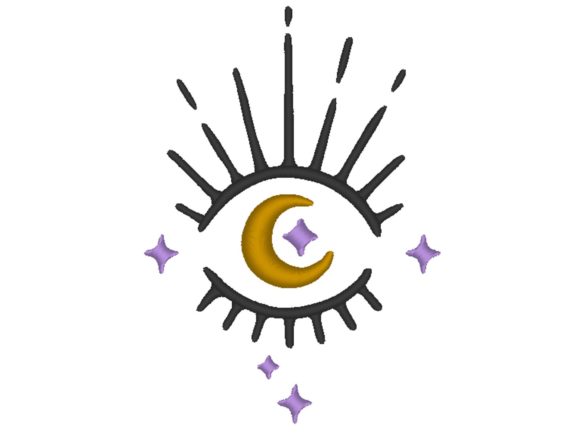
As someone who selects embroidery files daily for client projects—custom apparel, boutique nursery items, and Etsy-ready handmade goods—I opened Moon Eye expecting a classic Halloween motif. What I found instead was something quieter, more intentional: a single stylized crescent moon with a subtle, centered “eye” detail—no bats, no cobwebs, no exaggerated fangs. It’s not cartoonish or cluttered. It’s a confident, minimalist machine embroidery design that leans into negative space and clean line work. The visual mood is mysterious but approachable—ideal for customers who want seasonal charm without overt spookiness. That makes Moon Eye especially versatile: it reads as Halloween, yes—but also as celestial decor, night-sky nursery art, or even a gentle symbol for mindfulness or intuition.
Real-World Fit: Where This Design Naturally Lands
I tested Moon Eye across several real project types before committing to a client order: a linen kitchen towel, a midweight cotton sweatshirt, a baby blanket corner, and a twill cap. It performed strongest on stable, medium-weight fabrics where stitch definition stays crisp. On the towel, the satin stitch outline held beautifully against the textured weave; on the sweatshirt, it stayed flat and soft—no puckering—when paired with light tear-away stabilizer. For the cap, I confirmed it fits comfortably in a 4×4 hoop (a critical check—always verify hoop size before digitizing or stitching), and the curve of the front panel didn’t distort the shape. It’s not an applique design, so there’s no fabric layering to manage—just precise fill stitch, running stitch accents, and a smooth satin border. That simplicity translates directly to reliability in production.
What Works Well for Commercial & Handmade Use
- Small-batch efficiency: With only one design included, Moon Eye avoids decision fatigue. It’s easy to batch-stitch across pillow covers, tote bags, or aprons without adjusting color palettes or scaling.
- Etsy & craft fair appeal: Its restrained aesthetic photographs cleanly. Paired with neutral thread colors (charcoal gray, deep navy, or off-white on black fabric), it elevates a basic tote bag into a curated handmade product—ideal for seasonal listings that need to stand out without screaming “Halloween.”
- Nursery and baby item compatibility: Because it avoids sharp edges, busy motifs, or dense fill areas, Moon Eye feels gentle and safe for baby blankets and onesies—especially when stitched with soft, low-lint thread.
- Brand consistency: If you offer celestial-themed collections—or even just a cohesive “quiet holiday” line—Moon Eye pairs seamlessly with other understated designs. It supports storytelling, not just decoration.
Practical Considerations Before You Stitch
Like any digital embroidery file, Moon Eye demands thoughtful prep—not because it’s flawed, but because real-world embroidery depends on context. Here’s what I checked before using it commercially:
- Stitch density: It’s moderate—not overly dense—so it won’t overwhelm lightweight fabrics or create stiffness on baby items. But always test on scrap fabric first, especially if stitching on jersey or stretchy blends.
- Thread color contrast: On dark fabric, the eye detail can recede unless you choose high-contrast thread (e.g., pale gold or cream). On light fabric, a deep indigo or charcoal outline adds dimension. Don’t assume default colors will translate well.
- Stabilizer match: For towels and caps, I used cut-away; for sweatshirts and pillow covers, light tear-away worked perfectly. Skip heavy stabilizers—they’ll mute the design’s subtlety.
- Small detail inspection: After stitching, I held each piece up to natural light to confirm the eye center remained legible. Tiny details like this benefit from careful trimming and gentle pressing—never iron directly on embroidery.
- Licensing clarity: Since this is a Creative Fabrica embroidery download, I double-checked the product page for commercial use terms before listing finished items on Etsy or at a local boutique. Always confirm licensing—especially for digital embroidery files intended for resale.
How Moon Eye Adds Value Beyond the Stitch
It’s easy to overlook how much a single, well-chosen design affects perception. Moon Eye doesn’t shout—it invites attention. That quiet confidence boosts buyer trust: customers see intentionality, not mass-produced filler. When photographed on a handmade gift box or styled in a printable mockup, it communicates care and curation. For apparel decorators, it offers differentiation in a crowded custom apparel market. For Etsy sellers, it helps listings rank for phrases like “minimalist Halloween embroidery” or “celestial baby blanket”—terms that attract buyers seeking meaning, not just motif. And for creative entrepreneurs building a recognizable style, Moon Eye isn’t just a design asset—it’s a tone-setter. It signals that your brand values restraint, quality, and emotional resonance over trend-chasing.
Final Thoughts for Designers & Makers
Moon Eye won’t replace a full Halloween collection—but it fills a specific, valuable gap: the need for a single, refined embroidery file that works equally well on a chef’s apron, a child’s pillow cover, or a limited-edition tote for a local bookstore’s autumn launch. It’s not flashy, and it’s not complicated—but it’s reliable, adaptable, and quietly distinctive. If your workflow prioritizes clean execution over visual noise—and if your customers respond to handmade products that feel both seasonal and timeless—then Moon Eye earns its place in your design library. Just remember: test on scrap fabric, confirm hoop size and licensing, and let the simplicity speak for itself. Sometimes the most effective embroidery file is the one that doesn’t try too hard—and Moon Eye knows exactly when to hold back.