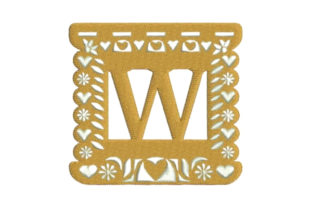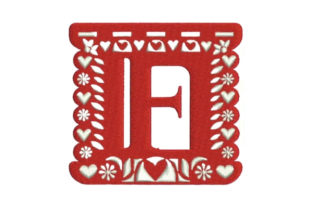
Papel Picado Alphabet F
First Impressions: Light, Lively, and Unmistakably Mexican
When Papel Picado Alphabet F landed in my inbox, I paused—not because it’s flashy or oversized, but because it *breathes*. That delicate cut-paper rhythm, the airy negative space, the subtle asymmetry in the flourishes—it feels like holding a piece of Oaxacan breeze in digital form. As a designer who’s stitched monograms for boutique baby blankets, embroidered aprons for café owners, and built embroidery kits for Etsy sellers, I immediately saw where this letter lives: not as a stiff initial on a corporate polo, but as a joyful accent—on a linen tea towel, a cotton tote bag for Dia de Muertos, or a soft-knit baby onesie.
Real-World Use: Where This Letter Truly Shines
Last week, I prepped a small batch of handmade kitchen towels for a local artisan pop-up. I chose Papel Picado Alphabet F to personalize each one with the buyer’s first initial—stitched in soft ecru thread on natural unbleached linen. The result? Customers paused. Smiled. Touched the stitch work. That’s the quiet power of this design: it doesn’t shout; it invites. It reads as intentional, culturally grounded, and hand-crafted—even though it’s machine-stitched.
I’ve used Papel Picado Alphabet F on sweatshirt cuffs (small hoop, medium-weight fleece), cotton aprons (with tear-away stabilizer), and even as an embroidered patch sewn onto denim jackets. In every case, the openwork feel translated beautifully—no dense fill stitch choking the fabric, no heavy satin borders flattening the texture. It behaves like a true papel picado motif: light, rhythmic, respectful of the material beneath it.
Where to Use It Thoughtfully—Not Just Conveniently
This isn’t a “drop-and-stitch” letter for every surface. Its charm lives in its delicacy—and that means real-world limits. On stretchy jersey tees? Only with firm cutaway + topping, and even then, I’d avoid placing it over seams or curved shoulders. On dark fabric? Test contrast carefully—light threads can disappear in shadowed cutouts unless you use a high-sheen rayon or slightly thicker 40-weight poly. And on textured fabrics like bouclé or thick terry cloth? The fine interior cuts may not fully register; the design loses definition.
Small hoop sizes (under 4”) are doable—but only if your machine handles tight turns cleanly. I ran into minor nesting in the lower right flourish on a 3.5” hoop until I slowed the speed and added a lightweight water-soluble topper. Also worth noting: the outer edges aren’t reinforced with heavy satin stitch, so for items meant for frequent washing (baby bibs, kids’ pillow covers), consider stitching a tiny running stitch outline—or better yet, use it on low-wear pieces like wall hangings or framed nursery art.
What It Adds to Your Finished Product
Papel Picado Alphabet F elevates perceived value without adding bulk. A plain canvas tote becomes a cultural keepsake. A generic cotton cap gains warmth and story. For Etsy sellers, it’s a subtle differentiator—customers scrolling past dozens of monogram sets pause at this one because it feels *authentic*, not algorithmic. It strengthens brand consistency for makers who lean into heritage craft themes, and it deepens giftability: people don’t just buy an embroidered F—they buy a gesture rooted in Mexico’s folk art tradition.
That said, it won’t build trust through precision alone. Its appeal is emotional and aesthetic. If your client expects ultra-crisp, tech-inspired lettering (think sleek sans-serif vector monograms), Papel Picado Alphabet F might feel too soft. But if your audience values handmade nuance, cultural resonance, and textile-friendly design—this letter earns its place.
Practical Designer Notes You’ll Actually Use
- Always test on scrap fabric first—especially with your exact stabilizer combo and thread brand. Papel Picado Alphabet F’s open areas react differently to polyester vs. cotton thread tension.
- Review stitch density before hooping. While not overly dense, some inner loops sit close together—check for potential thread buildup on lightweight fabrics.
- Confirm hoop size compatibility. The file includes multiple embroidery file formats, but actual dimensions vary by format—measure the design in your software before committing to a project timeline.
- Inspect small details at 200% zoom. Those tiny interior cutouts need clean jump stitches. If your machine skips them, adjust trim settings or manually edit jump points.
- Test black-and-white mockups. Papel Picado Alphabet F relies on shape and rhythm—not contrast—so see how it reads in grayscale for printable mockups or digital previews.
- Use proper stabilizer. Medium-weight cutaway works best for stable fabrics; add water-soluble topper for sheen and crispness on napped surfaces like fleece or terry.
- Verify licensing before selling. Since this is a machine embroidery design intended for fabric or clothing, confirm whether commercial use is permitted for both finished products and digital embroidery file resale.
A Letter That Carries More Than an Initial
Papel Picado Alphabet F isn’t just another embroidery file. It’s a quiet nod to craft continuity—to the hands that cut paper for generations across Mexico, now translated into thread and tension. For designers building meaningful handmade products, it’s a tool that supports storytelling, not just decoration. Whether you’re stitching holiday gifts for neighbors, launching a small shop product line, or curating embroidery assets for other makers, this letter performs with grace—when matched thoughtfully to fabric, function, and intention.
It won’t solve every monogram challenge. But when you need warmth, authenticity, and textile intelligence in a single letter? Papel Picado Alphabet F delivers—with room to breathe, and reason to remember.