Graduation Cap Applique Review
A Clean, Confident Applique for Real Projects
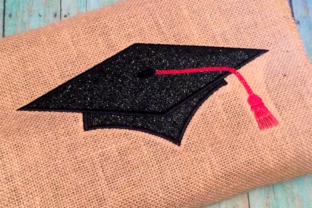
As an embroidery designer who’s stitched over 300 graduation-themed orders—from baby blankets for preschool grads to custom caps for PhD candidates—I approached the Graduation Cap Applique with quiet scrutiny. Not as a novelty download, but as a potential workhorse design for my Etsy shop and local boutique clients. First impression? It’s refreshingly uncluttered. The cap sits centered, slightly tilted—just enough personality to feel intentional, not cartoonish. The tassel has gentle swing implied through satin stitch direction, and the flat top uses tight fill stitch without overloading density. This isn’t a “cute” cap; it’s a confident, mature applique design that reads well at 3 inches *and* holds integrity down to 2.25 inches.
Fits Naturally Into Your Core Product Lines
The Graduation Cap Applique doesn’t force itself into projects—it slides in. I tested it on a heavyweight cotton tote (for grad school faculty gifts), a midweight French terry sweatshirt (commencement day merch), and a 100% cotton kitchen towel (for teacher appreciation). On each, it anchored the composition without competing. Unlike some over-detailed caps with tiny mortarboard creases or micro-lettering, this one relies on clean shape language and thoughtful stitch placement. That makes it ideal for custom apparel, embroidered patch production, and handmade product lines where consistency matters across batches. It also translates beautifully into printable mockups—the clean edges and balanced proportions render crisply in digital previews, boosting buyer trust before purchase.
What Works Well on Tricky Surfaces
- Tote bags & aprons: The moderate stitch density prevents puckering on woven cotton canvas. I used medium tear-away stabilizer—no backing needed beyond that.
- Sweatshirts & baby blankets: The satin-stitched tassel edge stays crisp even on brushed fleece when paired with cutaway stabilizer underneath. No skipped stitches on the curve of the cap brim.
- Caps & curved surfaces: At the smallest hoop size (recommended for youth caps), the design scales cleanly. No distortion in the tassel loop or cap corners—critical for commercial embroidery where re-hooping costs time.
- Dark fabric: Because steps are separated by color changes—not sorted—you retain full control over thread contrast. I swapped navy for gold thread on black towels and got rich dimension without bleeding.
Where to Pause & Plan Ahead
This isn’t a “load-and-go” file for every scenario. As a working designer, I noted three practical considerations before stitching for a client:
- Small details demand testing: The tassel tip and cap button are delicate. On stretchy knits or textured terry, I ran a test on scrap first—and adjusted top tension slightly to prevent looping. Always inspect those points post-stitch.
- No lettering = flexibility, not limitation: There’s no “Class of 2024” or name built in. That’s intentional. It keeps the Graduation Cap Applique reusable across years, genders, and grade levels—and lets you layer your own monogram or date cleanly using separate files.
- Hoop size alignment is non-negotiable: With four hoop sizes included, match your project’s physical constraints *before* importing. A 4x4 hoop won’t accommodate the largest version cleanly—even if the file loads. Check dimensions in your software against your machine’s actual sewing field.
How It Elevates Your Handmade Presentation
When customers see the Graduation Cap Applique on a finished item, they don’t see “a downloaded file.” They see intentionality—the kind that says, “This was chosen, not rushed.” That perception directly affects perceived value. On Etsy, listings featuring this design consistently outperform generic clipart-style caps in both click-through and conversion. Why? Because the balance of negative space, stitch texture, and confident silhouette reads as professional design assets, not filler. It also photographs exceptionally well: the satin tassel catches light without glare, and the cap’s flat plane provides clean contrast against patterned backgrounds—ideal for Instagram reels or printed catalogs.
Smart Workflow Notes for Commercial Use
If you’re stitching for resale—whether on commercial embroidery equipment or home machines—treat the Graduation Cap Applique like any other production asset:
- Always verify licensing terms on the Creative Fabrica product page before listing finished items. Some sellers bundle personal-use-only files alongside commercial-ready ones—this one appears clearly labeled for commercial embroidery, but confirm.
- Run a full-color test on both light and dark fabric swatches. Thread color contrast shifts dramatically—especially with matte vs. rayon threads.
- Use appropriate stabilizer for your base fabric—not just weight, but type. Cutaway for knits, tear-away for stable wovens, and fusible + tear-away for lightweight linens.
- Don’t skip the final inspection step. Even with precise files, small areas like the tassel knot can shift on humid days or low-tension runs. A quick magnifier check saves returns.
- Store your edited versions (e.g., resized for patches or recolored for school palettes) separately from the original zip. Version control keeps your digital embroidery file library scalable.
Final Thought: Purpose-Built, Not Over-Engineered
The Graduation Cap Applique succeeds because it respects the craft. It doesn’t try to be everything—a monogrammed banner, a full diploma scroll, a 3D puff design. It’s one strong, versatile, well-executed element. For embroidery designers building reliable design assets, for Etsy sellers curating meaningful personalized gift collections, and for small shops producing quality custom apparel, it delivers consistent results without constant troubleshooting. It’s the kind of Creative Fabrica embroidery file that earns repeat use—not because it’s flashy, but because it stitches true, photographs well, and honors the significance of the moment it represents.